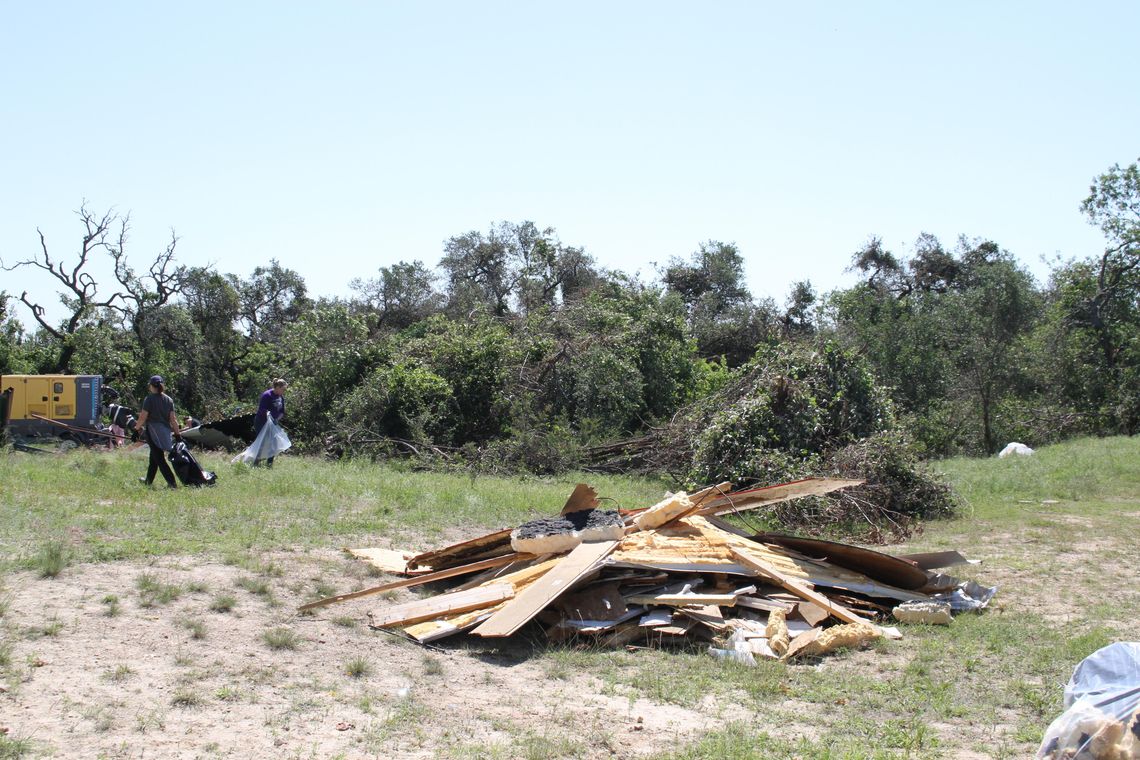
Springtown homeowners, renters and business owners affected by the spring storms now have until Sept. 4 to apply for a U.S. Small Business Administration disaster loan.
The SBA has provided a 60-day grace period due to the scale of the severe storms and April 25 EF1 tornado that damaged homes and properties throughout the Springtown area.
Sabrie Lika, a public affairs specialist with the SBA, said many people tend to overlook the agency because they believe it only works with businesses.
“Most of the time, when people hear SBA, they assume businesses,” she said. “That’s the general SBA, but our department is disaster recovery. Our goal is to help people recover.”
Lika said homeowners may qualify for up to $500,000 to repair or rebuild their primary residence and up to $100,000 to replace personal property, including clothing, furniture or a vehicle.
SBA disaster loans can also be applied for landscaping damaged by the storm, including tree removal.
Lika noted renters may also qualify for up to $100,000 for personal property that was damaged.
“For renters who think, ‘Well, I don’t own the house. I’m not eligible,’ — you’re eligible,” she said.
“If your car got damaged, if you are in an apartment and your clothes or your furniture got damaged, you can apply for the loan and see what you qualify for,” Lika said.
Lika said the loans are intended to help residents who are uninsured, underinsured or still face recovery costs after receiving insurance payments.
“The goal is to make you whole,” Lika said.
SBA disaster loans may have repayment terms of up to 30 years.
Lika said homeowners and renters may receive interest rates as low as 2.8%, while business rates may be as low as 4%.
Borrowers do not have payments due or interest charged during the first year of the loan. They may also pay the loan off early without penalty.
Lika said residents who have already paid for repairs with a credit card or bank loan may be able to use an SBA loan to replace high-interest debt.
“Some people put it on credit cards or they get a regular loan — that’s usually interest rates with double digits,” she said.
“The interest rate could be really high, they could never get ahead of that, and they feel like all they’re doing is working to pay off that loan or credit card. So, the fact that you could take a breath and pay a lot lower interest rate with the SBA disaster loan can help,” Lika said.
Lika emphasized that submitting an application does not require someone to accept the SBA loan. Applying before the deadline gives storm victims another option while they continue working with insurance companies, FEMA or other recovery programs.
“It’s better to have it there — you’re not obligated to take it,” she said.
Lika said businesses may qualify for up to $2 million for physical damage.
Businesses that did not receive direct property damage may also qualify for an Economic Injury Disaster Loan if storm-related issues affected their income.
“If you’ve lost clients, you can’t meet the payroll — there’s working capital available. The SBA is looking to keep small businesses afloat. Small businesses are the backbone of a community,” she said.
With the extended SBA deadline, Lika urged homeowners and small businesses to apply.
“Don’t let that deadline pass and then maybe your insurance didn’t pay, or you didn’t get a grant and there’s no other option for you,” Lika said. “My best advice is to just apply — there’s a lot of options that the SBA provides that people don’t know about.”
Lika said all applications should be submitted through the SBA’s disaster assistance portal. Once submitted, they can continue following their application status.
“They can go on the portal daily if they want to,” she said. “Once they learn whether they’ve been approved and what they’ve qualified for, they can make the decision to accept then.”
Lika said if applicants decide not to initially accept the loan offer, they can place the loan in a withdrawn status for up to six months and return to the portal to accept it, although an updated credit report may be required.
To create an application, visit the SBA disaster assistance portal at sba.gov/disaster. Applicants may also call the SBA Customer Service Center at 800-659-2955 or email [email protected]. Spanish-language help is available.