 Jolee Skinner
*Editor’s note: This story discusses suicide and suicide prevention.
September is National Suicide Prevention Awareness Month. The Centers for Disease Control says more than 48,000 Americans have died by suicide each year since 2021 — that’s an average of about 133 people every day or one person every 11 minutes. The Los Angeles County Department of Mental Health says the most notable cause is underlying mental health issues like depression or other mood disorders.
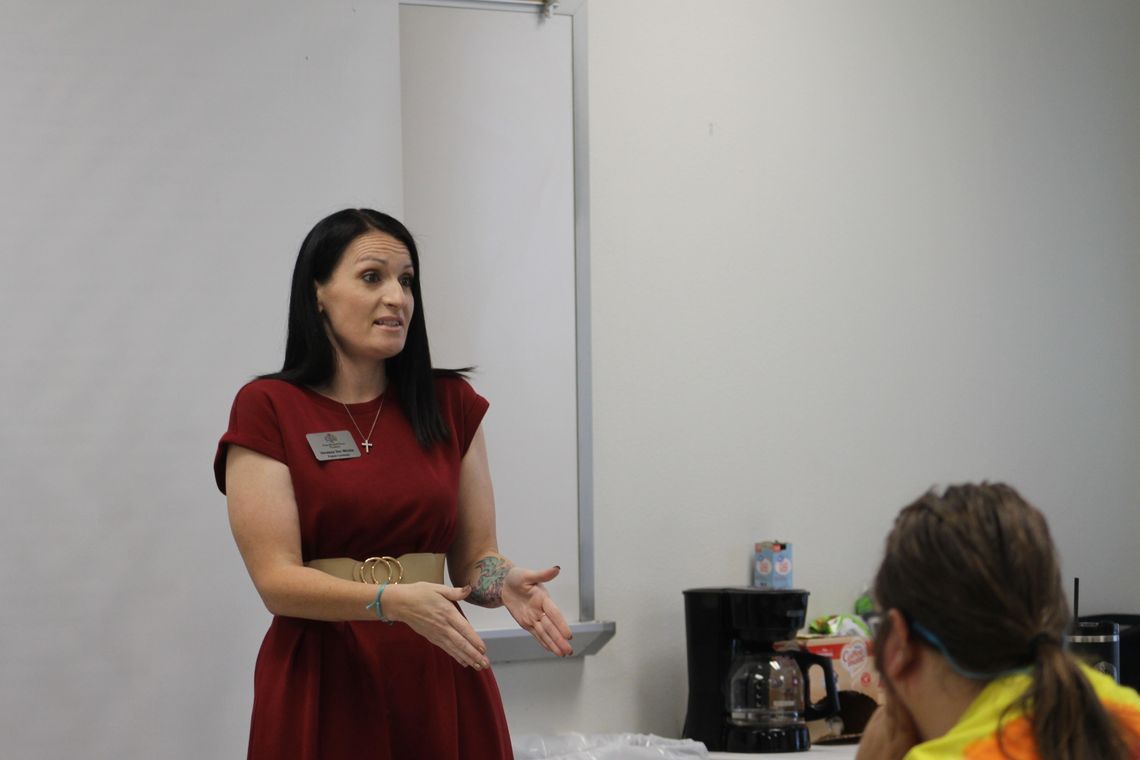
Venessa Van Winkle, a program coordinator at the Jordan Elizabeth Harris Foundation, a suicide awareness and prevention organization, says her goal through the foundation is to train as many people as possible in suicide prevention.
“People still have that stigma around suicide and don’t want to talk about it,” Van Winkle said. “We want to be proactive, teach the necessary skills and to be able to intercede for somebody.”
The Jordan Elizabeth Harris Foundation was started by Harris’ parents. Harris was a bright young woman who was valedictorian of her high school class, volunteered in her community and was loved deeply by all those who encountered her. At 22, six months before her college graduation, she was diagnosed with severe depression and died by suicide March 27, 2012.
According to the National Alliance on Mental Illness, about 12% of U.S. adults ages 18 to 25 report serious thoughts of suicide in the past year. Van Winkle said this group is the most unreached.
“The 18 to 25 age range is the most unreached because they know everything and nothing at the same time,” Van Winkle said. “A lot of them are looking to ChatGPT as a therapist. We want to make sure they know and understand the warning signs.”
Van Winkle explained the use of the acronym QPR, which stands for Question, Persuade and Refer. It is a road map to offer someone hope through positive action. When someone shows signs that they are having suicidal thoughts, it’s important to ask them what’s going on, and Van Winkle says the more direct you are, the more likely you are to be able to prevent someone from taking their own life. Asking questions like, “Have you been unhappy lately?” or “This is a really painful time for you, are you thinking about suicide?” does not increase suicide risk and can open a conversation that leads to help.
“Any positive action can save a life,” Van Winkle says.
Looking for verbal or behavioral clues is key when recognizing the warning signs of a potential suicidal crisis. Some direct verbal clues are:
- “I wish I was dead.”
- “I’m going to end it all.”
Indirect verbal clues:
- “I’m tired of life.”
- “I just want out.”
- “You would be better off without me.”
Behavioral clues:
- Relapsing into drugs or alcohol
- Suspicious behavior like going out at odd times at night, sudden disinterest in hobbies or religion
) - Making or changing a will (if not characteristic)
- PTSD episodes
According to the QPR Institute, the acute suicide warning signs include suffering from severe mental illness such as severe anxiety, depression, inability to sleep, false beliefs of doom, heavy drinking, ruminating about irrational fears and inability to calm down. Once the uncomfortable question has been asked, most people who want to die by suicide need to talk.
The QPR Institute says listening is a key factor in getting someone help. QPR emphasizes listening carefully after asking someone about suicidal thoughts. Important tips when listening are to give the person your full attention, do not interrupt, speak only when the person is done talking, do not rush to judgment or condemnation and confirm your own suspicions with questions.
The next step is to try and get the person professional help. Asking, “Will you go with me to see a counselor?” or “Will you let me help make an appointment with … ?” goes a long way.
One way to make an effective referral is to personally make an appointment and take the person you are worried about to a mental health provider. According to research, most people considering suicide who agree to get help will act in good faith and get the help they need. However, some may not follow through. It is recommended by the QPR Institute to physically go with the person to treatment to help ensure they follow through.
“Ultimately, you are sitting there with them and offering hope,” Van Winkle said.
For more information about suicide prevention and awareness or how to help your community, visit www.jordanelizabethharrisfoundation.org. If you or someone you know is struggling or in crisis, text, call or chat 988 or visit www.988lifeline.org.