 Jose 'JJ' Balderas
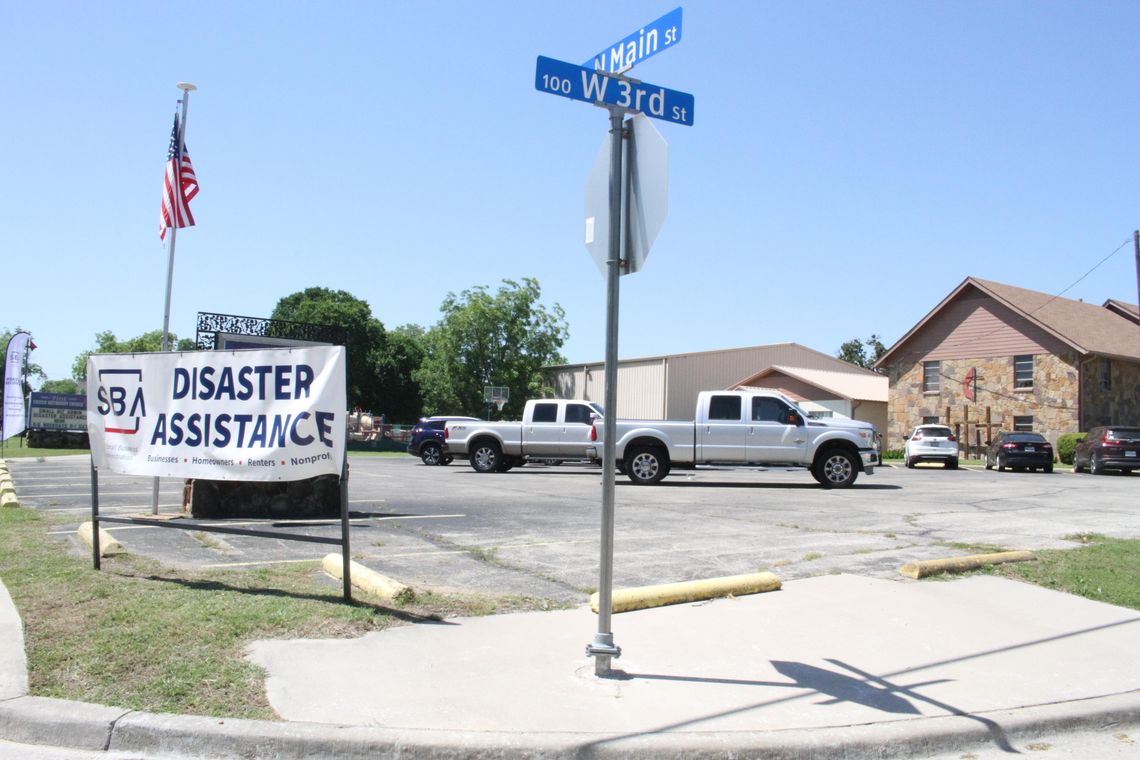
Residents seeking financial assistance to recover damaged homes, personal property or businesses from the April 25 EF-1 tornado and severe storms have until July 6 to apply for physical damage disaster loans through the U.S. Small Business Administration.
The SBA Disaster Loan Outreach Center is currently operating out of First United Methodist Church in Springtown. Hours of operation are Monday through Friday from 9 a.m.-6 p.m. and Saturdays from 9 a.m.-1 p.m.
The SBA disaster loan program became available after damage assessments from the storms and tornadoes met qualifications for a federal disaster declaration covering Parker and Wise counties, along with additional counties throughout North Texas.
Danielle Haywood, a public affairs specialist with the SBA said one of the biggest misconceptions is that SBA disaster assistance is only available to businesses.
“Our disaster program is available for anyone that’s impacted by the disaster,” Haywood said.
“They do not have to be associated with a business to have access to our programs. Our programs are going to help people with physical damage to their homes — for renters, their personal property — we have a lot of different things available.”
According to the SBA fact sheet, homeowners may qualify for up to $500,000 for the repair or replacement of real estate. Homeowners and renters may also qualify for up to $100,000 to replace personal property which includes vehicles.
“It doesn’t matter if somebody has insurance or not — we encourage everyone to apply through us,” Haywood said.
“We actually have the ability to work with insurance companies and get people the funds faster. We really encourage anybody, whether they think ‘I need it or not’ to come talk to us,” she said.
Haywood said the SBA program can be also helpful for renters who have lost their personal property such as a vehicle.
“A lot of times people realize that what we have is a pretty great program for renters,” Haywood said.
“An example I like to use when it comes to storms is, let’s say your car is totaled from hail or some tree fell on it — you can get your new car through us and our interest rate starts at 2.875%. You’re not buying a car at that interest rate anywhere, so that’s a good example of the benefits of the program.”
Haywood said that assistance can also help residents who may be underinsured or facing high deductibles after the storm.
“Sometimes people’s insurance money isn’t going to cover the full cost of rebuilding and so we can fill in those gaps as well. If somebody is rebuilding their house, they can finance it through us and have that 2.875% interest rate,” she said.
The SBA fact sheet also states that applicants do not have to have available credit elsewhere to qualify for disaster recovery, and can get repayment terms which can go up to 30 years, depending on a borrower's ability to repay.
The program also has no interest or payments for the first 12 months.
“The idea behind that is to make sure you’re going to be able to get back on your feet and recover,” Haywood said.
Small businesses impacted by the storms may also qualify for assistance through physical and economic injury loans.
“Physical damage will be if their physical warehouse, their office was damaged if they had machinery inside — they can use our program to replace that,” Haywood said.
Along with property damage to businesses, Haywood said economic injury loans are designed to help businesses continue operating if revenue was disrupted by the disaster since most businesses often shut down after experiencing a catastrophic disaster.
“Business recovery post-disaster is huge and there’s a very high percentage of businesses that won’t reopen after a disaster. So, we try to prevent that,” she said.
“They can apply for that (economic injury) and they can still pay their bills even though they may not have revenue coming in right now. Any sort of bottom line that was impacted by the disaster — they’re able to pursue economic relief,” Haywood said.
In contrast to the July 6 deadline for physical damage, applications for economic injury assistance will remain open until Feb. 8 since it can take time for business owners to fully understand how deeply the disaster affected their revenue and operations.
While many residents may feel overwhelmed or believe they cannot qualify due to losing documents or finances during the storm, Haywood said storm victims are encouraged to consult with the SBA outreach center.
“That happens all time,” Haywood said on residents feeling unprepared or lost during the application process.
Staff located at the outreach center can help residents complete applications, explain loan options and guide applicants through replacing missing documents lost during the disaster.
“Just come talk to us. We can figure out what you have, what you don’t have, help you go through the process (and) figure out where to go from there. We’re here to help the community recover,” she said.
First United Methodist Church has served as the primary hub that allowed the Texas Department of Emergency Management, American Red Cross and United Way to provide resources to the community after the destructive EF-1 tornado and severe weather passed through the city April 25.
Pastor Terre McGill witnessed many residents who came to the church in seek of shelter and resources. McGill said many storm victims began to bond with one another after their homes were heavily damaged or destroyed.
“People were able to talk — that helps folks process what they’ve been through, which was beneficial,” she said.
“Being able to have folks come in, even if they just needed a meal, to be able to sit over a table with somebody that’s been through the same thing and is dealing with some of the same things — that was really amazing,” McGill said.
She said the recovery effort also revealed the strength of Springtown as churches, nonprofits, businesses, food trucks, law enforcement and first responders worked together to help residents in need.
“To see an entire community coming together like that is — from my vantage point — it’s the Holy Spirit already at work in the community,” she said.
McGill said she hopes homeowners and renters understand the SBA outreach center is there to help more than just business owners.
“I hope people know — I think people hear ‘SBA’ and might think it’s only for businesses,” she said.
“There’s a lot of folks that maybe have really high deductibles that this can help with — underinsured or not insured and might need help — I know that (SBA) being here is huge,” McGill said.
The SBA outreach center will continue to operate at First United Methodist Church for the coming weeks. Residents who believe they have been affected by the storm are strongly encouraged to visit the center or they can apply for disaster assistance online by visiting sba.gov/disaster.