 Jose 'JJ' Balderas
Creating a welcoming and effective learning environment often requires teachers to gather classroom supplies, educational materials and creative resources before the school year begins.
The Welman Project, a nonprofit organization now located at 2109 S. Main St. in Fort Worth, has helped teachers throughout North Texas communities for over 10 years by providing educators with donated materials and making them available to educators at no cost.
The organization has recently moved from its longtime location off Vickery Boulevard in Fort Worth to its new location within the historic Kimball Milling Company building on South Main.
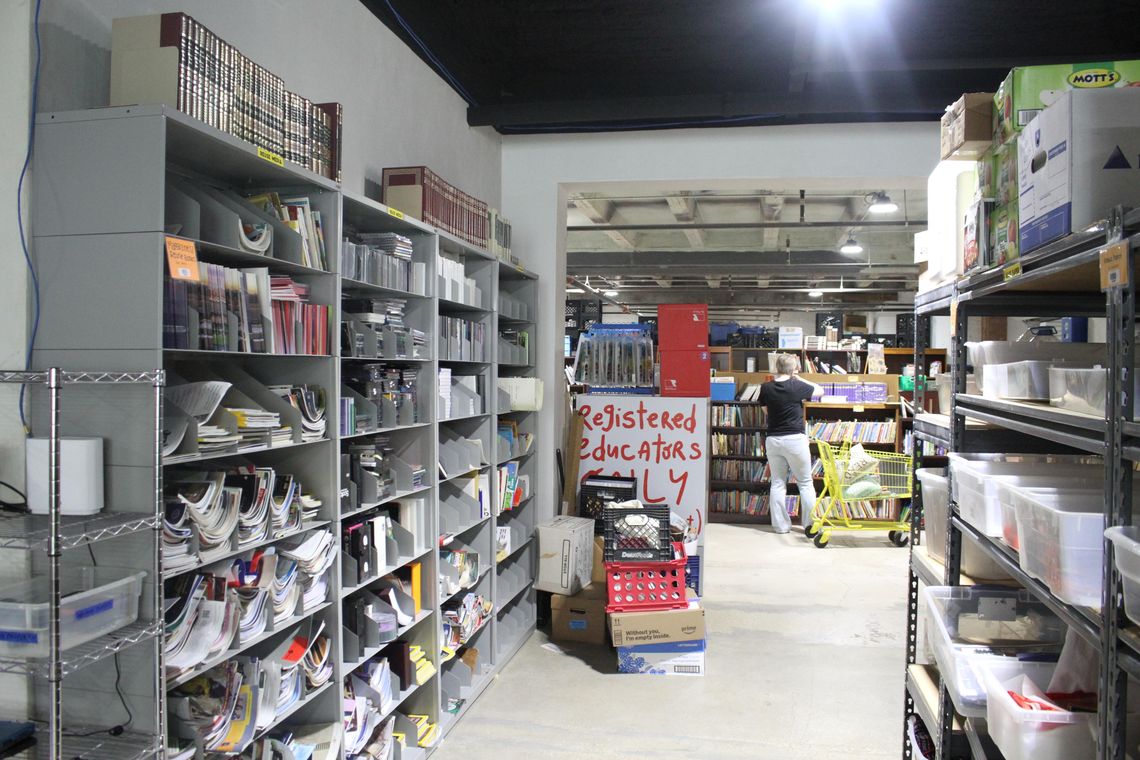
The new facility provides five times more space, wider aisles and a larger warehouse, allowing the organization to expand its services and inventory.
“Our main mission is to fill a classroom, not a landfill,” Executive Director Taylor Willis said.
“We provide free supplies and support to teachers. We have a warehouse where teachers can come in and take anything they need for free for their classrooms.”
The organization serves teachers at public schools, charter schools and nonprofit private schools. Public school employees can register with a current school ID badge, while nonprofits can complete a registration form online before visiting.
Willis said there are no limits on how much teachers can take or how often they can visit.
“There’s no limits on how much you can take or how often you can come shop, as long as you’re shopping for professional use — we really encourage teachers to take a lot,” Willis said.
“I think teachers tend to be really kind and want to leave stuff for others, but we get so much donated — we really want you to take stuff and experiment with it and play with it in your classroom. You can always return things you don’t end up using. We want to give you the freedom to have all the materials you need and go crazy with it,” she said.
The warehouse contains a diverse inventory that changes daily as new donations arrive. Shelves are stocked with office supplies, school supplies, arts and crafts materials, books, party decorations, building materials, and a wide variety of unconventional items that can be reused for educational purposes.
“We get a lot of stuff donated from businesses that they no longer need,” Willis said.
“Plastic file trays that we get a lot because offices are going paperless, those can be used as weaving looms. We have DVD cases that can be used as mini whiteboards. Whatever teachers are looking for, we want to help them with a solution. We have our team ready to give them ideas too. If we don’t have exactly what they’re looking for, we can figure out an alternative for them with something we have available for free,” she said.
The organization also receives large inventories of brand-new materials.
“We get a lot of brand-new items from businesses,” Willis said. “Whether they’re moving and cleaning up their storage closet — a lot of our stuff is actually just brand-new surplus that somebody didn’t need anymore,”
The warehouse inventory changes constantly. Willis encouraged teachers to visit even if they are unsure whether the warehouse will have exactly what they need.
“I think people are typically surprised,” she said. “When you hear free, it kind of seems like it’s a scam or it’s going to be junk or whatever, but everybody has a really great experience.”
The shopping experience at the Welman Project is unlike a traditional store. Instead of placing items in a cart and checking out at a register, shoppers use a mobile app to scan barcodes attached to every item they select. The process helps the organization track donations and measure its impact.
“We have barcodes on everything, so you scan as you shop,” Willis said
“The main reason that we do it is because we’re largely grant funded and so we need to be able to report to our funders how much we’re giving away and where it’s going. It (also) helps us know what teachers are taking, so we know when we are talking to businesses, we can let people know, ‘Hey, these kinds of things are really popular for our teachers. We want to get some more of them,’” she said.
The mobile app system also shows teachers the value of the materials they receive.
“You’ll get a receipt for how much you saved,” Willis said. “You can go spend that money somewhere else on yourself.”
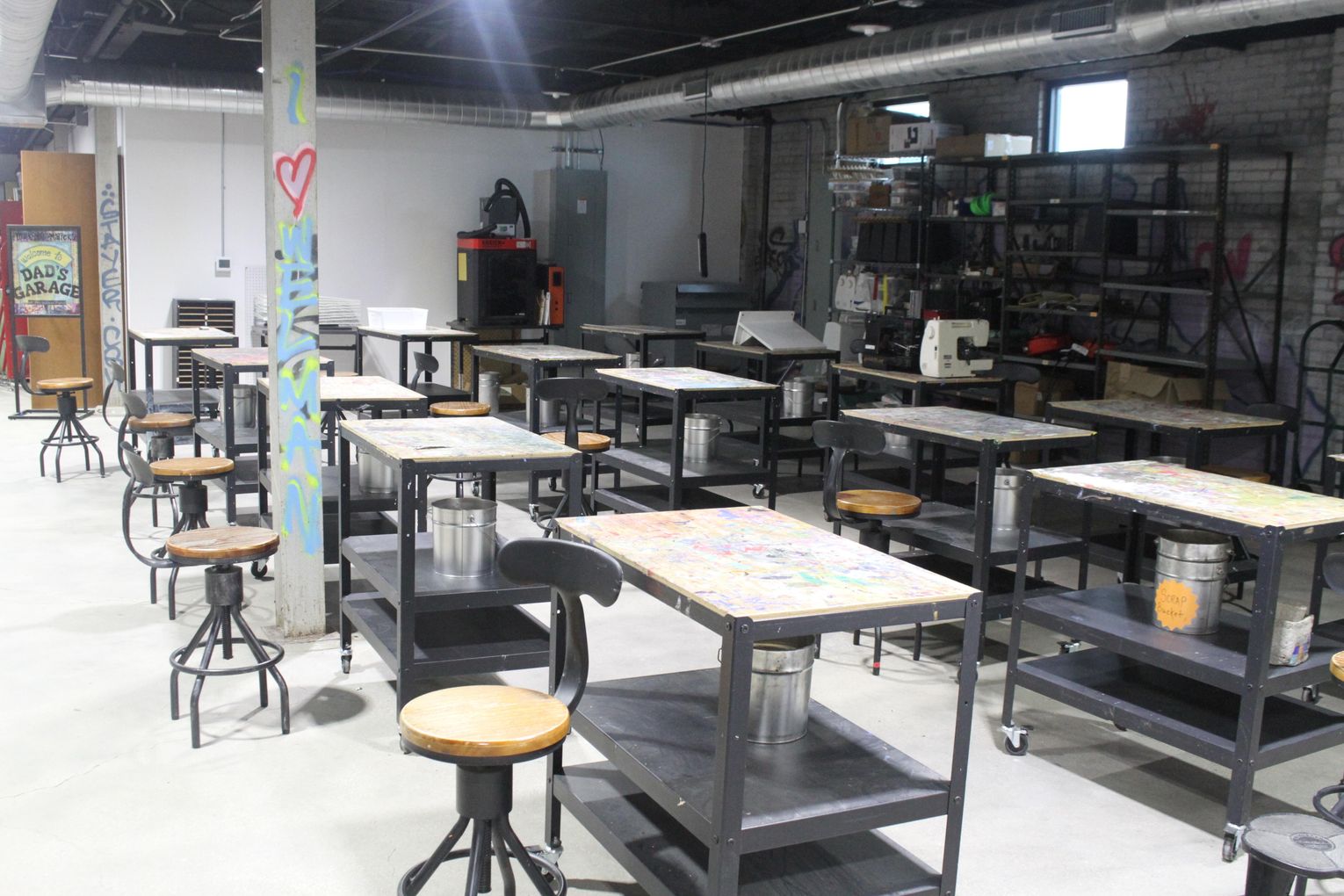
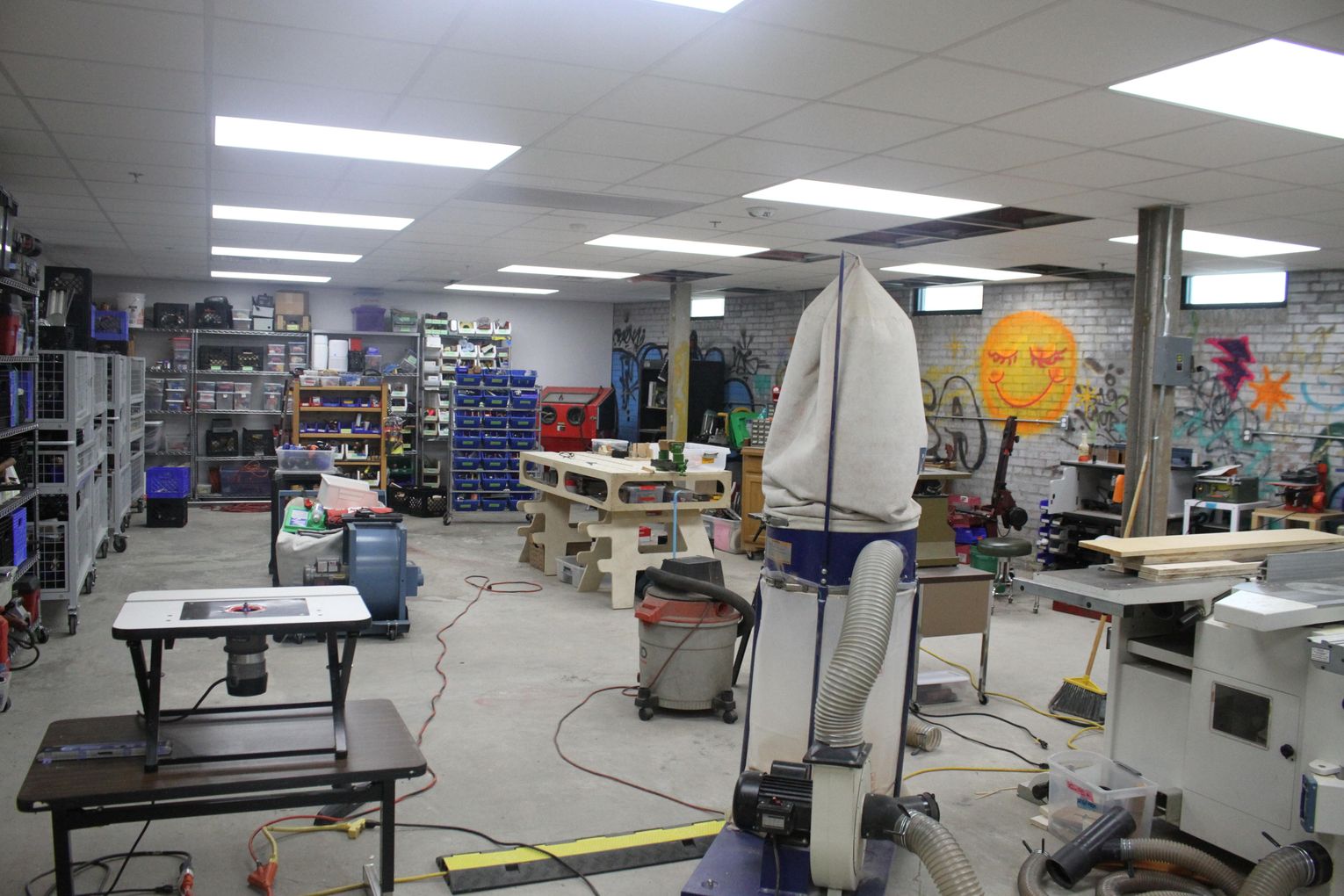
Another highlight of the facility is its makerspace. The area is also free for educators to use and serves as a collaborative workspace where they can create classroom, projects, learn new skills and experiment with equipment that may not be accessible in a school.
The makerspace includes a full wood shop, 3D printers, Cricut machines, laminators, die-cut equipment, binding and sewing machines.
“Basically, if you just need a workspace, want to spread out and get some stuff done, we have plenty of open space that you can just come (and) do your project, so it doesn’t have to be on your dining room table,” Willis said.
The organization also hosts free professional development workshops within the facility throughout the year.
“We’re TEA (Texas Education Agency) certified, so you can get continuing education credits,” Willis said.
“We really load them up in the summer, so we have a lot on our calendar right now that you can sign up for. We can also arrange a private professional development (training) just for your team or school. We’ve had professional development training for all the art teachers, theater teachers or family engagement specialists. We can really customize your experience to whatever your campus or your district’s needs are,” she said.
Teachers, retired educators, volunteers and makers regularly visit the facility, creating what Willis described as a supportive community where people can exchange ideas, assist one another and connect over a shared passion for education and creativity.
“It’s been really neat to develop this kind of a growing community of people that think of the Welman Project as kind of a third space that they can spend time,” Willis said.
For North Texas educators who may be hesitant to make the drive, Willis believes the experience itself is worth the trip.
“I think you’ll have an uplifting, encouraging experience,” Willis said. “Even if you don’t leave with a full car, which I think you will, I think the vibe is really great. A lot of teachers need that right now. Just come feel the support and love for you and from your community that’s here for you.”
The Welman Project’s summer hours are noon to 6 p.m. Tuesday through Friday and 9 a.m. to 5 p.m. Saturdays. Wednesday hours are extended until 8 p.m.
Educators can register to shop, donate materials, or learn more about volunteer opportunities through the organization’s website, my.thewelmanproject.org/home.